
Share :
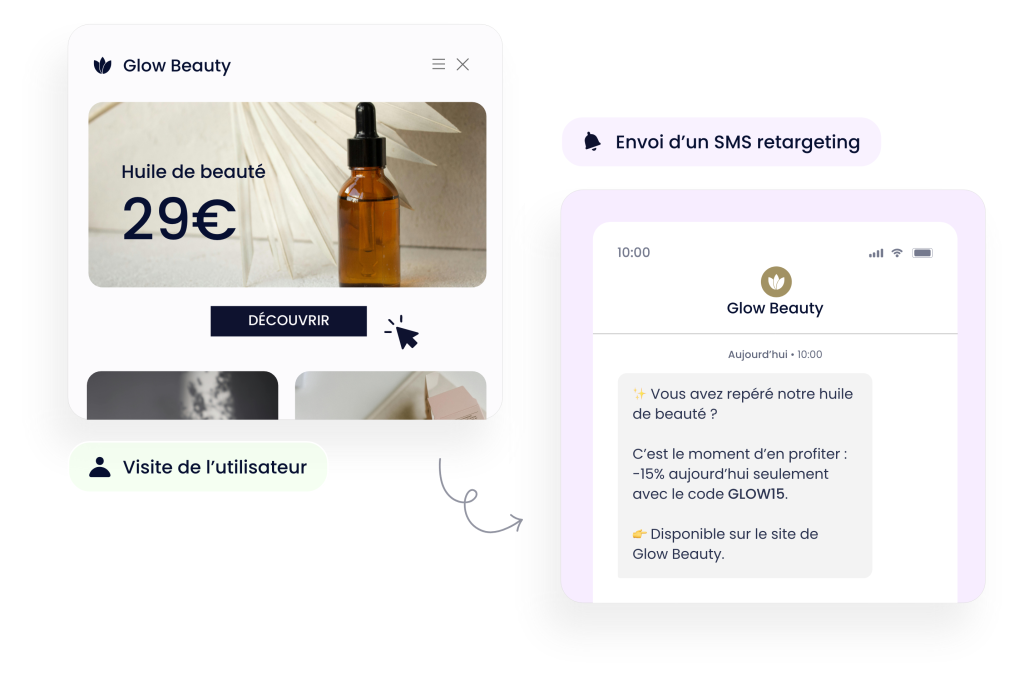
SMS involves following up with a prospect via SMS a visit, an abandoned shopping cart, or a period of inactivity.
It is a highly effective lever, provided that three fundamentals are respected: clear consent (opt-in), short message, good timing.
In concrete terms, you need to segment your audiences, trigger automatic sending, and redirect to the right content without creating too much marketing pressure.
Result: more conversions, fewer abandonments, more repeat purchases—without relying solely on saturated channels such as email or paid advertising.
An actor like smsmode© allows you to easily connect your tools, secure your data (ISO 27001), and streamline your SMS campaigns.
Introduction
Digital marketing is a highly competitive field, where customers are volatile and hard to convince. It is therefore necessary to increase the number of touchpoints to boost your chances of conversion. SMS a powerful tool, with an open rate (98%) and conversion rate (between 8 and 29%). SMS is therefore an effective solution for re-engaging prospects after they have visited your website or interacted with your brand, allowing you to leverage this direct channel for your business. Discover how to integrate SMS your retargeting strategy.
Definition
SMS is a highly effective marketing strategy that involves sending a SMS to a prospect following their visit to your website or interaction with one of your campaigns.
This marketing technique aims to target people who have already shown an interest in your brand. The advantage of this solution is that it allows you to target consumers who are interested in your brand/product through your marketing campaigns.
SMS is useful for:
- Increase brand awareness
- Improve conversion rates
- Acquire new customers
- Convert a visitor
- Reduce shopping cart abandonment
- Encourage repurchasing
Before implementing SMS , it is important to have:
- Mandatory opt-in: explicit consent (GDPR), no pre-checked boxes, clear statement
- STOP: "STOP" must be mentioned in order to unsubscribe & immediate automatic unsubscription if STOP is sent
- Consent: Form (sources and date)
- First-party data: data collected by your company via your website, application, CRM, email interactions, physical store, etc.
Set up SMS
To make good use of SMS , certain factors must be taken into account:
The target
Knowing your target audience well is essential for sending SMS to your customers. It is therefore important to segment your prospects carefully: inactive customers, visitors who have not made a purchase, visitors who have not confirmed their shopping cart, etc.
💡 Segmenting the target audience allows you to send SMS messages SMS to customer needs.
Triggers
Triggers may vary depending on the CRM, CMS, or SMS plugin you use. The two main ones are Shopify & Klaviyo.
Here are some examples of triggers and the recommended timing for send your SMS.
Cart abandonment: Productadded to cart without purchase.
✒️ We recommend that you send your abandoned cartSMS between 30 minutes and 1 hour after abandonment.
Visiting a product page without adding to cart or purchasing: Viewingone or more products on your website without adding to cart or paying.
✒️ We recommend sending your SMS 12 and 24 hours after the prospect's visit. You can reduce this time to 3 hours, using a combined trigger, such as: visit + interaction with another campaign.
Customer inactivity after one or more purchases: Nopurchases by a customer since their last order placed several weeks ago.
✒️ We recommend following up with customers at least once a month to show them your new products or items they might like.
SMS triggers SMS CMS: Klaviyo and Shopify
| KLAVIYO | SHOPIFY |
|---|---|
| Use the native event "Checkout Abandoned" | Create a Flow with Trigger: "Started Checkout" or "Viewed Product" |
| Connect to an SMS app SMS example: smsmode© via automation) | Filter: “Has consented to SMS |
| Condition: identified customer + SMS opt-in | Action: Send SMS |
| Smart Sending enabled to prevent overuse |
The perfect messages for SMS
A clear, short, powerful message with CTAs will have more impact on customers. Highlighting benefits can encourage customers to take advantage of the offer and purchase your products and services. Or an "urgent" message can create a sense of need (or FOMO), which will prompt them to complete the purchase without delay.
Determine the type of content based on your business and your objective: discount code, reassurance, customer case studies, product sheets, white papers, etc.
A good SMS message SMS increase traffic to the brand's website , but avoid marketing pressure.
To do this:
- Limit to 2-4 SMS per month per contact
- Exclude customers who have already converted (or too recently)
- Set a minimum time interval between two SMS e.g., 48-72 hours).
The website
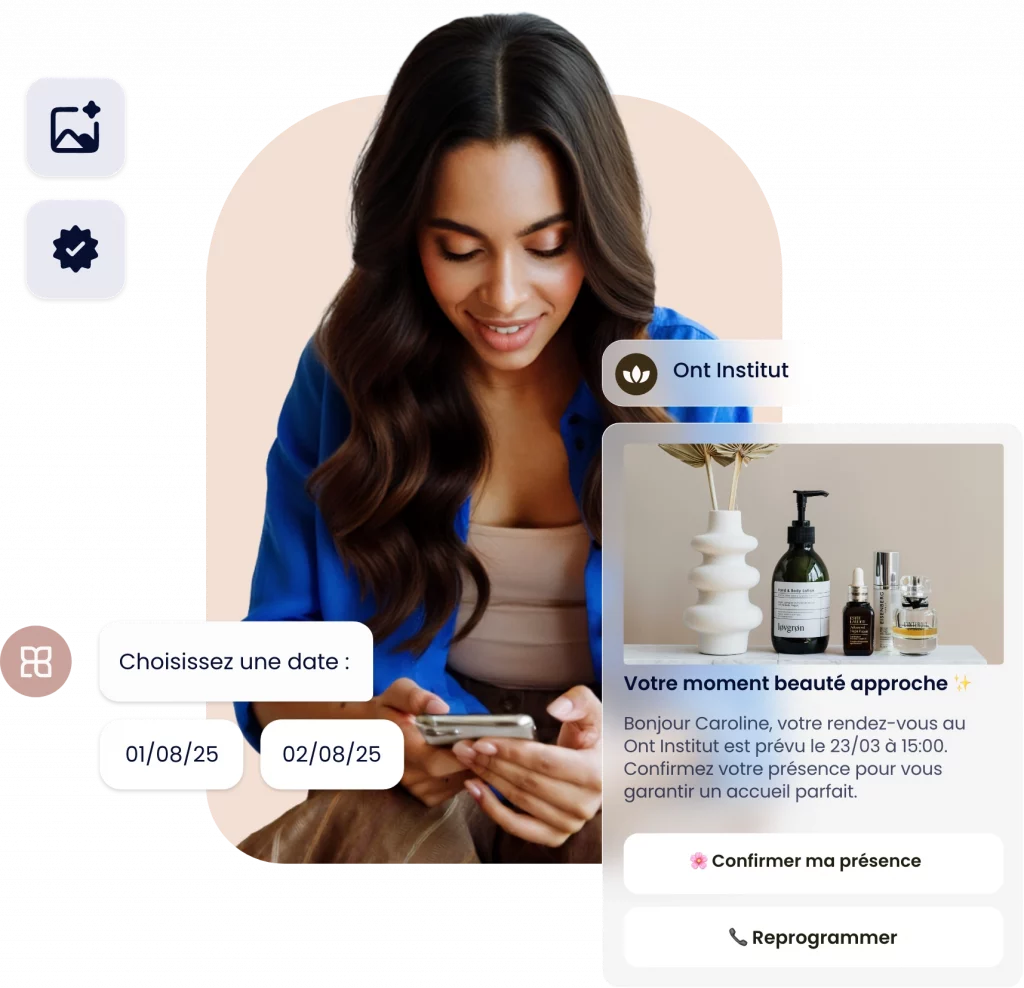
To maximize conversion rates, it is essential to redirect visitors to the company's website. The goal is to encourage prospects to take action, so it is important to make it easy for them to make a purchase by directing them to a specific page rather than the site's home page. When designing SMS , you must choose the page to which internet users will be redirected. Ideally, they should be sent to the product or services they have already viewed or to their abandoned shopping carts.
Examples of SMS
Abandoned cart recovery
MyBrand
Hello,
Your [brand] shopping cart is waiting for you!
Complete your order in one click: [link to shopping cart]
Product relaunch as seen by a prospect
Store
Hey,
The product [product reference] is still available.
Don't wait any longer to add it to your cart!
[Product link]
Follow-up after a purchase
online store
Hello,
It's been a while since your last order!
We thought of you, you might be interested in these items.
[Link to items]
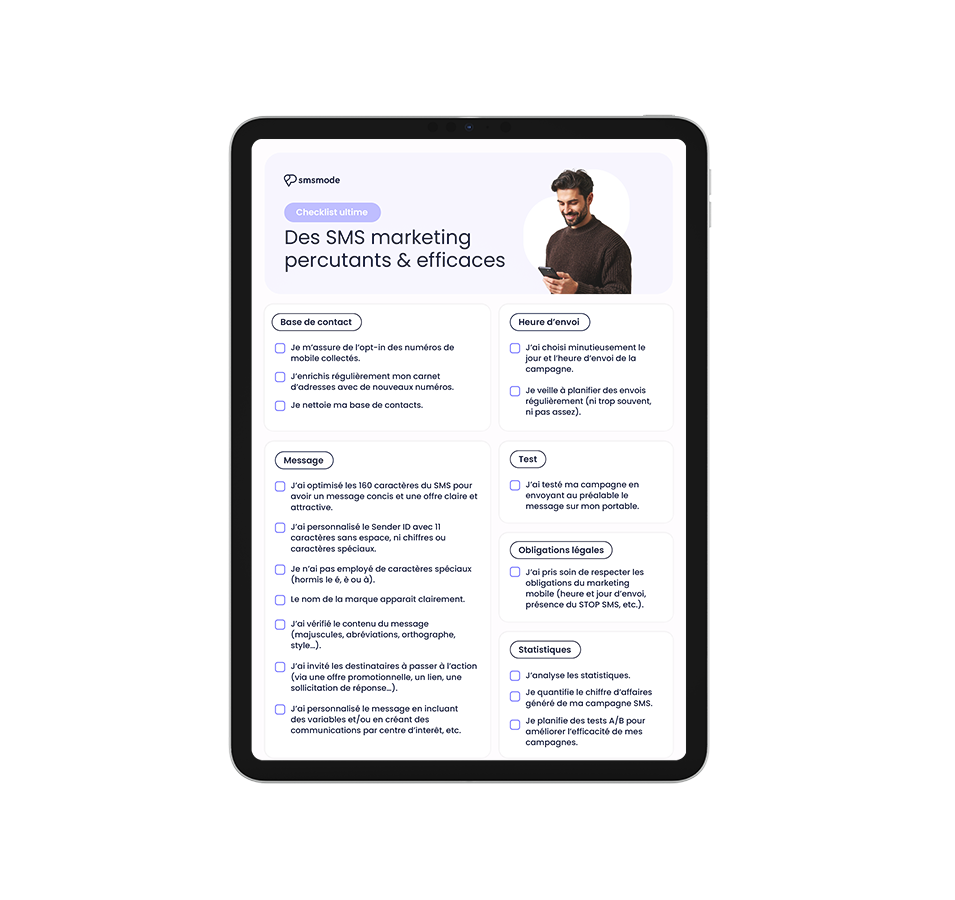
Master all the important points before sending your campaign
Why trust smsmode© for your SMS campaigns?
- ISO 27001-certified French platform
- Technical and marketing expertise
- Simple integrations with your tools (CRM, e-commerce, automation, etc.)
- Customized strategic support services
Try out our SMS platform and benefit from 20 free test credits, with no obligation.