How to Keep Your SMS from SMS Up in the Spam Folder

Alexia Moustier
Share :
Introduction
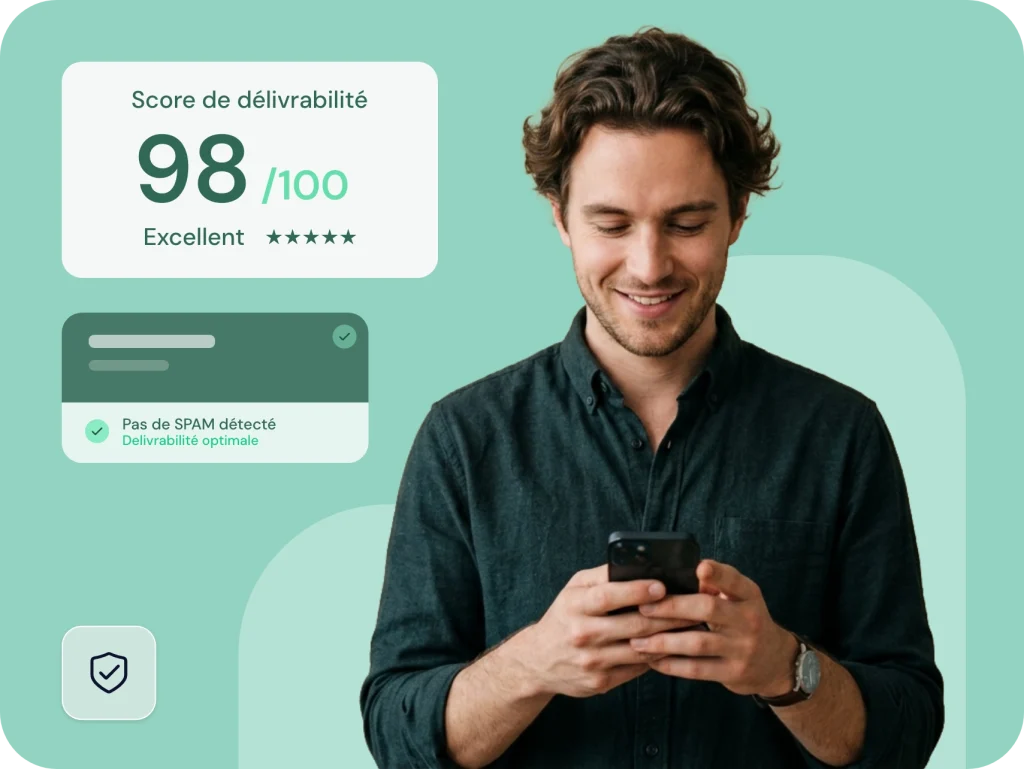
SMS an open rate of 98% and remains one of the most direct communication channels available. For a long time, being marked as spam was an issue unique to email. That is no longer the case. Since 2022, SMS have skyrocketed in France—and along with them, filtering mechanisms have been significantly strengthened, both by mobile carriers and mobile operating systems.
Result: your legitimate SMS campaigns may now be blocked or marked as spam, even if you follow the rules. Understanding how this filtering works is the first step toward avoiding it.
Why SMS Your SMS Be Filtered?
In France, SMS filtering SMS at two distinct levels. The first occurs at the network level, even before the message reaches the recipient’s phone. The second occurs directly on the device.
Filtering by Operators and Aggregators
SMS aggregators as smsmode© and telecom providers (Orange, SFR, Bouygues, Free) analyze every message in transit. The goal is to block SMS ( SMS phishing SMS smishing)), phishing attempts, messages impersonating well-known brands, etc.) before they reach the recipients.
Several elements are scrutinized: the Sender ID (your sender name), the URLs in the message body, and the content itself. A generic Sender ID, a suspicious shortened URL, or a message that’s too similar to a known SMS can be enough to trigger a spam filter.
Filtering by Mobile Operating Systems
For SMS that pass through the network filter, a second level of filtering may occur on the phone itself. It is this “silent” filtering that is more difficult for the sender’s organization to detect and correct.
On iOS, there is no SMS spam folder. Messages are categorized in two ways:
- Unknown senders: If your number isn't saved in the recipient's contacts and there has never been any interaction between you, iOS may place your message in this category.
- Anti-spam apps: Apps such as Truecaller or carrier apps (such as Orange Phone) analyze the reputation of sender numbers and flag messages reported by other users as spam.
On Android, the Google Messages app has a "Spam and Blocked" folder. The classification depends on several factors:
- User Reports
- The response rate to received messages
- The similarities between SMS (messages that are too similar to one another raise red flags)
- Whether or not the sender's number is in the recipient's contacts
The Crucial Role of User Interaction
Beyond algorithms, it’s your recipients’ behavior that has the greatest impact on your deliverability. The reputation of your sending number (short code) or sender name is built up—or damaged—with every campaign.
Certain behaviors increase the risk that your future SMS filtered as spam:
- Deleting the message immediately without reading it
- Blocking the sender
- A complete lack of interaction over a long period of time
Conversely, an SMS generates a reply, a click, or a positive interaction strengthens your number’s reputation and reduces the risk of your messages being filtered out in future campaigns.
How can you prevent your SMS from SMS marked as spam?
1. Get consent from your contacts
This is the starting point. Before sending anything, your contacts must have explicitly agreed to receive your SMS messages. In France, this requirement falls under the GDPR and the Law on Confidence in the Digital Economy (LCEN).
You can obtain this consent at various points in the customer journey:
- When registering on your website
- As part of a loyalty program
- When making a purchase (online or in-store)
A contact who has voluntarily agreed to receive your SMS naturally SMS more likely to engage with them. They will also be much less likely to mark them as spam or block you.
2. Encourage your customers to sign up with you
A SMS from a number (Time2chat) or from a sender saved in your contacts is much less likely to be filtered, on both iOS and Android. This is one of the most effective (and most underutilized) ways to protect your deliverability.
Include this request right from your first interactions with a new client:
MyBrand
Hello [First Name], To make sure you don't miss any of our offers and can easily find our messages, save our number in your contacts. See you soon!
3. Encourage responses and interactions
Mobile carriers and operating systems interpret a message with no reply as a potentially negative signal. Conversely, a two-way exchange—even a minimal one—reinforces the legitimacy of your number.
A SMS not only helps increase engagement, but also proves that your messages are truly of interest to your recipients:
36034
Your package is on its way!
To track your order in real time, press 1.
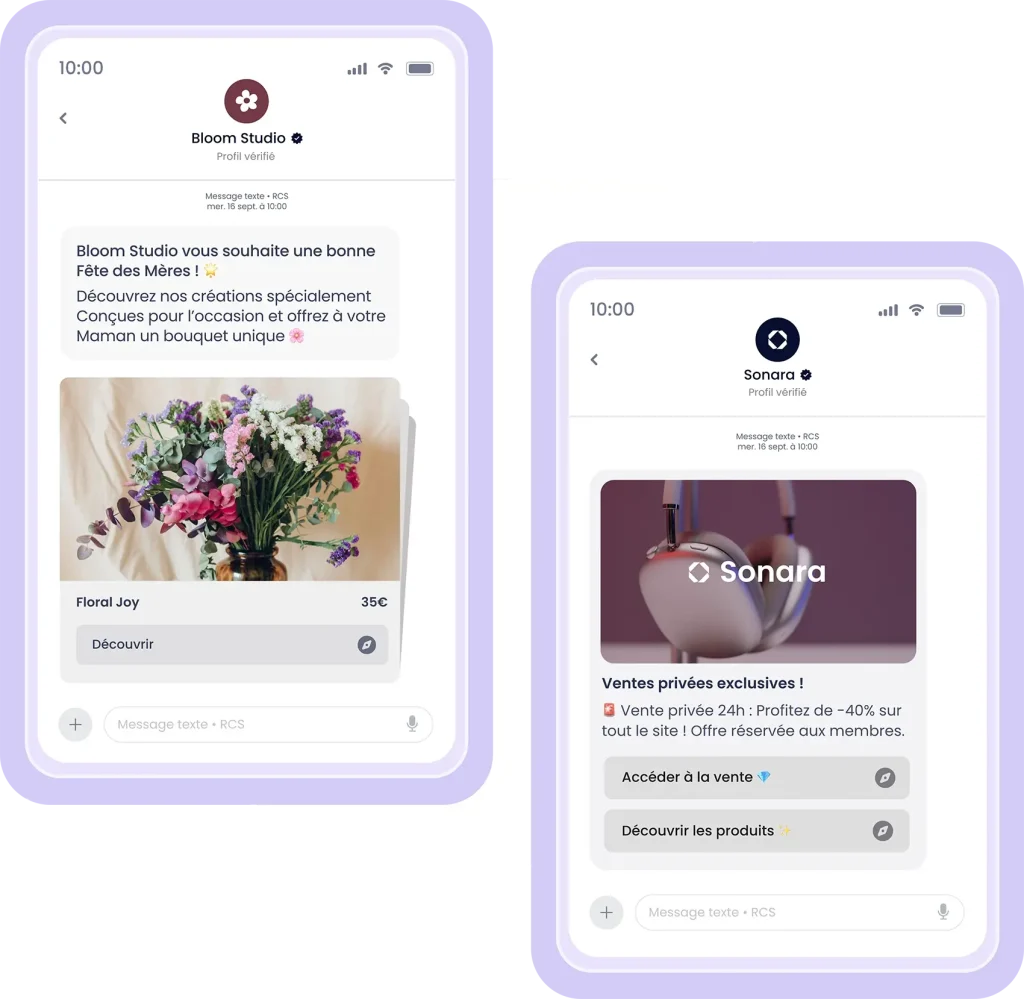
Take advantage of a verified sender profile, which verifies your identity to your customers and ensures your emails reach their inboxes.
4. Personalize your messages and make them relevant
Spam filters detect mass mailings that are too uniform. The more similar your messages are to one another, the greater the risk of them being blocked. Personalization isn’t just a best marketing practice—it’s also a key factor in deliverability.
Bet on:
- Personalized messages (first name, purchase context, history)
- Offers that are truly relevant to each segment
- Useful content that justifies sending the email
The more SMS the reason for receiving your SMS , the less likely it is to be blocked.
5. Pay attention to your Sender ID and avoid suspicious content
Your sender name (Sender ID) is the first thing network filters analyze. Use a clear, recognizable name that is consistent with your brand. Avoid generic names, unusual special characters, or variations from one campaign to the next.
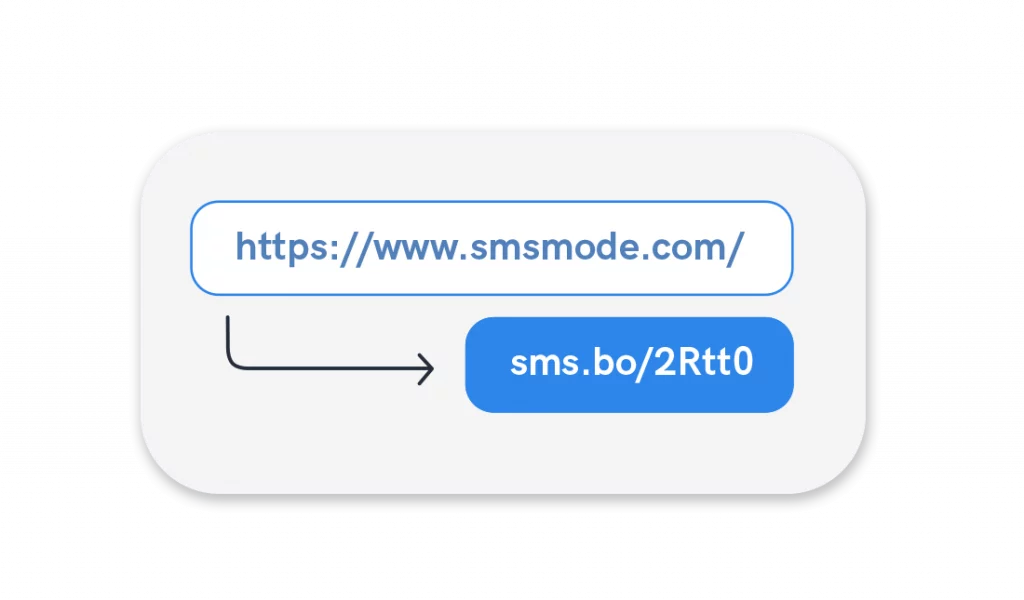
Regarding the content: be wary of unbranded shortened URLs (often associated with SMS ), overly aggressive promises, and phrasing that resembles the tactics used in smishing and SMS phishing.
Never get caught in a spam filter again. Manage your shortened URLs from your account and track clicks.
6. Clean your contact list regularly
Inactive phone numbers, contacts who haven’t interacted in a long time, and invalid phone numbers: all of these automatically lower your engagement rates and can trigger filters. A clean, segmented database ensures deliverability that lasts over time.
What smsmode Does© to protect the deliverability of your campaigns
Avoiding filters doesn't depend solely on your content. Your choice of routing platform also plays a role. The routes your SMS take, the reputation of network connections, and the management of Sender IDs vary significantly from one aggregator to another.
At smsmode©, our routes are directly connected to French carriers (Orange, SFR, Bouygues, Free, etc.), without going through intermediary aggregators that could jeopardize the reputation of your mailings. Our teams continuously analyze filtering signals to adjust our routing practices.
Would you like to test the deliverability of your SMS campaigns SMS smsmode©?
FAQ
What is smishing?
Smishing (a portmanteau of SMS “phishing”) is a form of phishing carried out via SMS. Scammers send fraudulent messages impersonating well-known brands to steal personal information, banking details, or login credentials. These practices have contributed to the strengthening of spam filters, including those for SMS .
How do I report a SMS in France?
You can forward any SMS or fraudulent SMS to 33700, the official number for reporting SMS spam SMS by French telecom providers in partnership with Signal Spam. This service helps populate the national filtering databases.
Can a carrier block me even if my SMS legitimate?
Yes, that’s possible—especially if your contact list isn’t well-qualified, if you send large volumes all at once without a prior sending history, or if your Sender ID resembles a name that’s already been flagged as fraudulent. That’s why reputation is built gradually, as you scale up your sending volumes.
Does iOS automatically classify SMS spam?
iOS does not have a universal, SMS spam folder. Messages categorized under “Unknown Senders” are not strictly speaking spam—it’s a way to separate known and unknown contacts. However, some third-party apps (such as Truecaller and carrier apps) may mark your messages as spam based on user reports.
Try out our SMS platform and benefit from 20 free test credits, with no obligation.